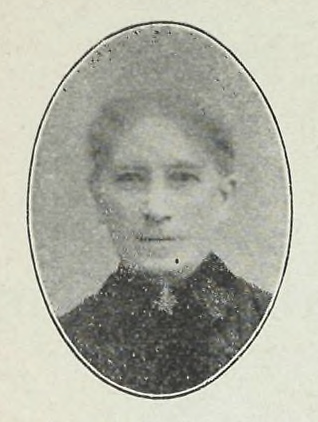
Mary F. Scranton
1832–1909
United States
Methodist missionary and founder of Ewha Hakdang
 Museum of the Bible KoreaSpecial exhibition← All Exhibitions
Special Exhibition A · Seven thresholds
From the Joseon household to the modern glass door—the thresholds Korean women opened, crossed, and still encounter in the presence of the Bible.
This exhibition does not claim that the Bible caused every change. It traces where biblical words opened possibilities, where church and society resisted or reversed them, and where other movements acted independently.
Each scene gathers around one person, object, or place. Where the record does not speak, the museum will not pretend that it does.
In the fifteenth century, daughters could inherit in equal shares with sons. Ancestral rites rotated among children, and a husband often lived first with his wife’s family. What the nineteenth century inherited was not timeless Korean custom.
Across three centuries the household turned patrilineal. Brides moved to husbands’ families; rites and property increasingly followed sons. The Gyeongguk daejeon prescribed one hundred strokes for a yangban woman who held an outdoor feast or performed rites herself. Restriction pressed hardest where rank was highest. Commoner women still worked, traded, and petitioned—not freedom, but a different exposure.
The door in this room is not shut. It is closing.
The change was structural: family shrines spread, residence shifted toward the husband’s household, male-heir adoption became normal, and rites and property followed the male line. A son continued the family. A daughter passed through it.
So God created man in his own image… male and female he created them.
Genesis 1:27 · ESVOn 11 March 1888, twenty-one Korean women met in Mary F. Scranton’s house in Jeongdong and formed a church of their own. Two were appointed jeondobuin—Bible women, Korea’s first female church workers.
They went to women who could not come to them. One reported visiting house to house and meeting a hundred people. She had read Mark’s Gospel and a catechism. Asked why she loved Jesus, she answered without hesitating: because Jesus forgave my sins. Her name is absent from the report and from every other record found so far.
Her sentence is.
Custom kept men and women apart in worship and teaching. A male missionary could not enter the rooms where women were; a Korean woman could. The restriction did not create the opening—it determined who could pass through it. The reports call these two women unnamed. Identifying them as mothers of Ewha pupils is a later inference, not a documented fact.
And the twelve were with him, and also some women… who provided for them out of their means.
Luke 8:1–3 · ESVAnnual Report of the W.F.M.S., 1888, pp. 46–47 · H. G. Appenzeller, Diaries, 12 March 1888 English
Bible women entered the anbang—the inner room—and sold Bibles and hymnals, taught Hangul, and preached. It was salaried work. From autumn 1889 they were openly employed; one mission alone sent fifty-seven in twelve years.
Training became a career path. Women’s Bible classes met during the farming off-season; permanent schools followed with a three-year course in Scripture, doctrine, church history, academic subjects, and practice. Korea already had paid women in the palace and state medicine. This role differed because it became available beyond those older state institutions.
This work was open to an ordinary woman. And it paid her.
Hangul was accessible and therefore disparaged as vulgar script by many of the learned. The first Bible women were recruited from women who could already read; the profession later included teaching others. The claim belongs to the developing role, not necessarily the unnamed first two.
And how are they to hear without someone preaching?
Romans 10:14 · ESV한국민족문화대백과사전 「전도부인」 한국어
On 1 September 1898, women of Bukchon issued a declaration endorsed by about three hundred people. It claimed rights to education, political participation, and economic life. Hwangseong sinmun printed it on 8 September; Dongnip sinmun followed the next day.
It was signed Lee Sosa and Kim Sosa. Sosa is not a personal name; it marked a married woman in the record. They founded Chanyanghoe and, in 1899, Sunseong Girls’ School. Six months before the declaration, sixty-three women in Pyongyang had independently organized a missionary society.
Two cities. Two reasons. One year.
A surname placed each woman in a patriline; Sosa marked her as married but did not preserve her personal name. No evidence has been found connecting the Bukchon reform declaration with the Pyongyang church society. Setting them together guards against turning sequence into causation: the record shows two streams of Korean women organizing for different ends.
Your sons and your daughters shall prophesy.
Acts 2:17 · ESVKim Jeom-dong (김점동) entered Ewha in November 1886, aged ten. Her father worked for the missionaries; the school provided food and clothing. At her 1891 baptism she became known as Kim Esther. After marrying Park Yu-san (박유산) in 1893, she adopted his surname according to Western naming custom and became known as Esther Park (박에스더). These names mark stages in one life, not different people. From 1890 she interpreted for a woman doctor and learned medicine as she worked. In 1896 she entered Baltimore Woman’s Medical College—the first Korean woman to study medicine.
Her husband Park Yu-san (박유산) worked in Baltimore so she could study, then died of tuberculosis three weeks before her final examinations. She sat them and passed. Offered a practice in America, she came home. In her first ten months she treated 2,414 patients, more than half of them alone. She died at thirty-four.
At her baptism she chose the name Esther. She chose it herself.
A women’s clinic opened because a male doctor could not treat a woman under prevailing custom. Kim first learned medicine while interpreting. Her path depended on mission institutions and her husband’s wages—but the decisions to persist, qualify, and return were hers.
Daughter, your faith has made you well; go in peace.
Mark 5:34 · ESVIn 1919 Yu Gwan-sun (유관순) led a market demonstration. Kim Maria (김마리아) raised funds for the government in exile. Kim Hyang-hwa (김향화), a gisaeng, turned thirty-three women away from a compulsory inspection and led them to the police station. Yu and Kim shared a prison cell.
In 1927 Geunuhoe made an end to wage discrimination part of its program. From 1931 Jeju haenyeo organized hundreds of actions against colonial control of their cooperative. Women built civic power through labor, religious, educational, and independence movements. In 1948 they voted in the republic’s first election.
Universal suffrage arrived with the new republic after thirty-five years of colonial rule. It did not end women’s struggle for equal citizenship.
This is not a Christian-causation story. Schoolgirls, church organizers, gisaeng, workers, and Jeju divers acted from different locations and for different reasons. Christian women also financed and extended churches that withheld ordained authority from them for decades. The Bible could authorize their service while institutions still limited their voice. The record must hold both truths together.
What does the LORD require of you but to do justice, and to love kindness, and to walk humbly with your God?
Micah 6:8 · ESV우리역사넷 · 한국민족문화대백과사전 「근우회」 · 제주해녀항일운동 기록 · 김향화 독립유공자 공훈록 ↗ 한국어
Women are half of Korea’s population. In 2024, 54.7% of women aged fifteen and over worked, compared with 70.9% of men. Women were 44.6% of all employed people and 57% of temporary and daily workers.
Korea’s full-time gender wage gap fell to about 29%—real improvement, yet still the widest in the OECD. Education and paid work weakened the old arithmetic of lineage, but rank did not disappear; its measures increasingly became credentials, position, and income. Progress and exclusion occupy the same room.
The last door is glass. She can see through it. Why is it still closed?
The figures use different statistical bases and must remain dated. The 54.7% rate covers people aged fifteen and over; the OECD wage figure compares median earnings of full-time wage and salary workers. The Bible does not merely ask whether women can enter the ranking system. Jesus repeatedly overturns the ledger itself, honoring those who cannot repay and measuring greatness through service. These statistics will be refreshed before public release.
There is no male and female, for you are all one in Christ Jesus.
Galatians 3:28 · ESVStatistics Korea, Korean SDG Report 2025 · OECD, Gender pay gap data (2023/2024) ↗ English · 한국어
People in this exhibition
Names, years, and roles appear together. Nationality, citizenship, and residence are distinguished only when relevant and verified.
1832–1909
United States
Methodist missionary and founder of Ewha Hakdang
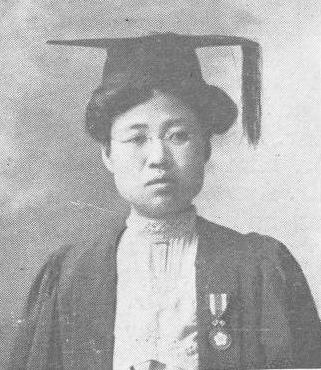
1877–1910
Born Kim Jeom-dong; baptized as Kim Esther in 1891; known as Esther Park after marrying Park Yu-san in 1893 and adopting his surname according to Western custom. Korea’s first woman physician trained in Western medicine.
–1900
Husband and working partner who supported Kim Jeom-dong’s medical study
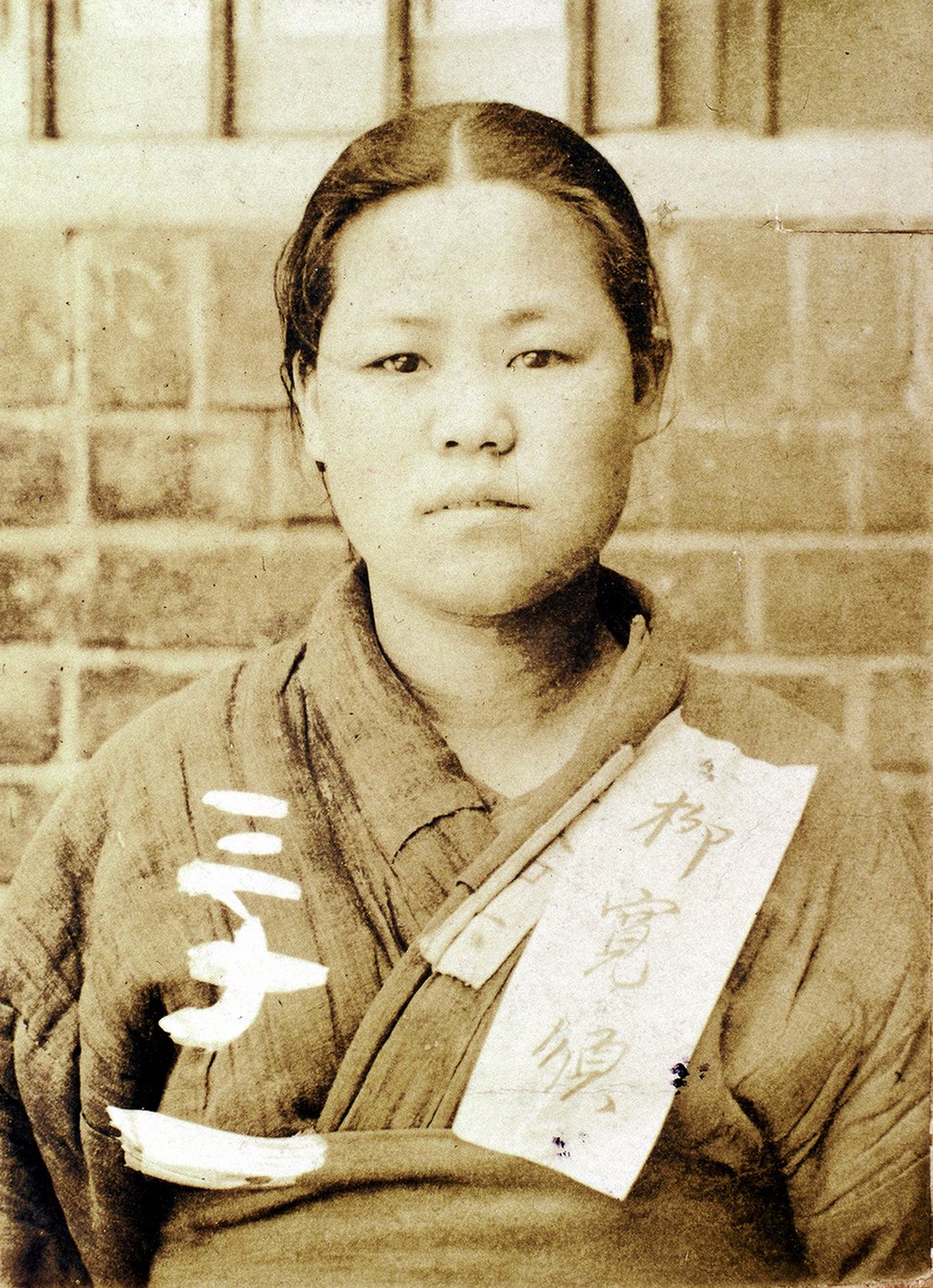
1902–1920
Student leader in the March First independence movement
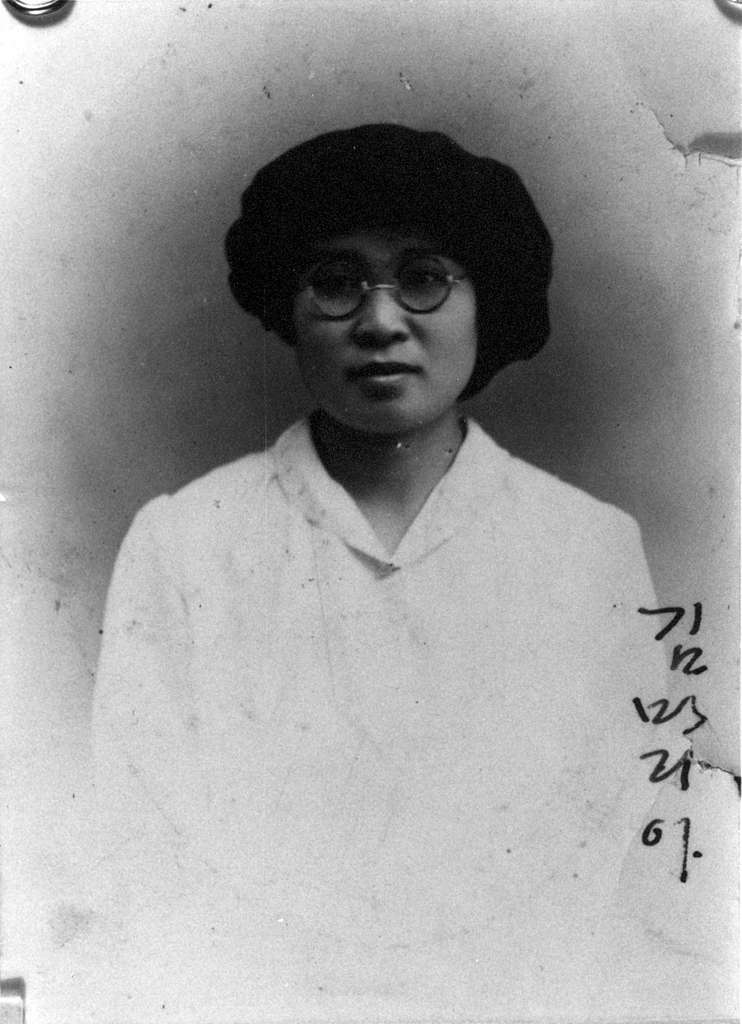
1892–1944
Independence activist, educator, Christian organizer, and Hwanghae Province representative in Korea’s Provisional Assembly from 1922
1897–unknown
Gisaeng and leader in the 1919 Suwon independence demonstration; her later life and death remain unconfirmed
Signer of the 1898 women’s declaration; the record does not preserve her personal given name
Signer of the 1898 women’s declaration; the record does not preserve her personal given name
Portraits appear only when identification and image rights have been verified.
At the threshold
What becomes possible depends on how Scripture is understood, whose voices are heard, and which doors are opened now.