Light and salt
A phrase for a person or influence that preserves, illuminates, and serves the common good.
 Museum of the Bible KoreaSpecial exhibition← All Exhibitions
Special Exhibition 01 · The Bible in Korean Culture
In Korea the Bible did not remain inside the church. It entered speech and painting, poetry and film, clothing and meals, friendship and institutions.
You are the salt of the earth… You are the light of the world… Let your light shine before others.Matthew 5:13–16 · ESV
A biblical trace proves influence, not automatically understanding or obedience. Some phrases spread while losing their context; some art dresses the Gospel in Korean visual language; institutions may embody or appropriate Scripture.
Four rooms repeat the museum’s questions: What was already present? What impact followed? And beyond these cultural traces, what is the Bible to you?
Phrases used by people who never enter a church show that the Bible became cultural vocabulary. But a surviving phrase does not mean the whole story survived with it.
A phrase for a person or influence that preserves, illuminates, and serves the common good.
The smaller contender facing a giant—common in sports, politics, and business reporting.
Someone who strays and returns, sometimes with the father’s welcome forgotten.
A stranger who stops to help; the phrase now names emergency-help principles and public virtues.
Abundance growing from what seems too small—often used for multiplication or resourcefulness.
A near impossibility—although ordinary speech often loses Jesus’ warning about wealth.
You are the salt of the earth… You are the light of the world.
Matthew 5:13–14 · ESVBiblical contexts can be checked through the Korean Bible Society platform. Descriptions of everyday usage are cultural observations, not presented as measured etymological statistics.
Korean Bible Society resources ↗Translation does not stop with words. The story of Jesus was seen again through Korean faces, clothing, landscapes, and poetic conscience.
During the Korean War, in 1952–53, Kim Ki-chang painted thirty Gospel scenes relocated into Joseon Korea. Jesus and the disciples wear Korean dress; nativity and passion unfold among Korean homes and landscapes. The series asks whether the Gospel must erase culture or may become visible within it.
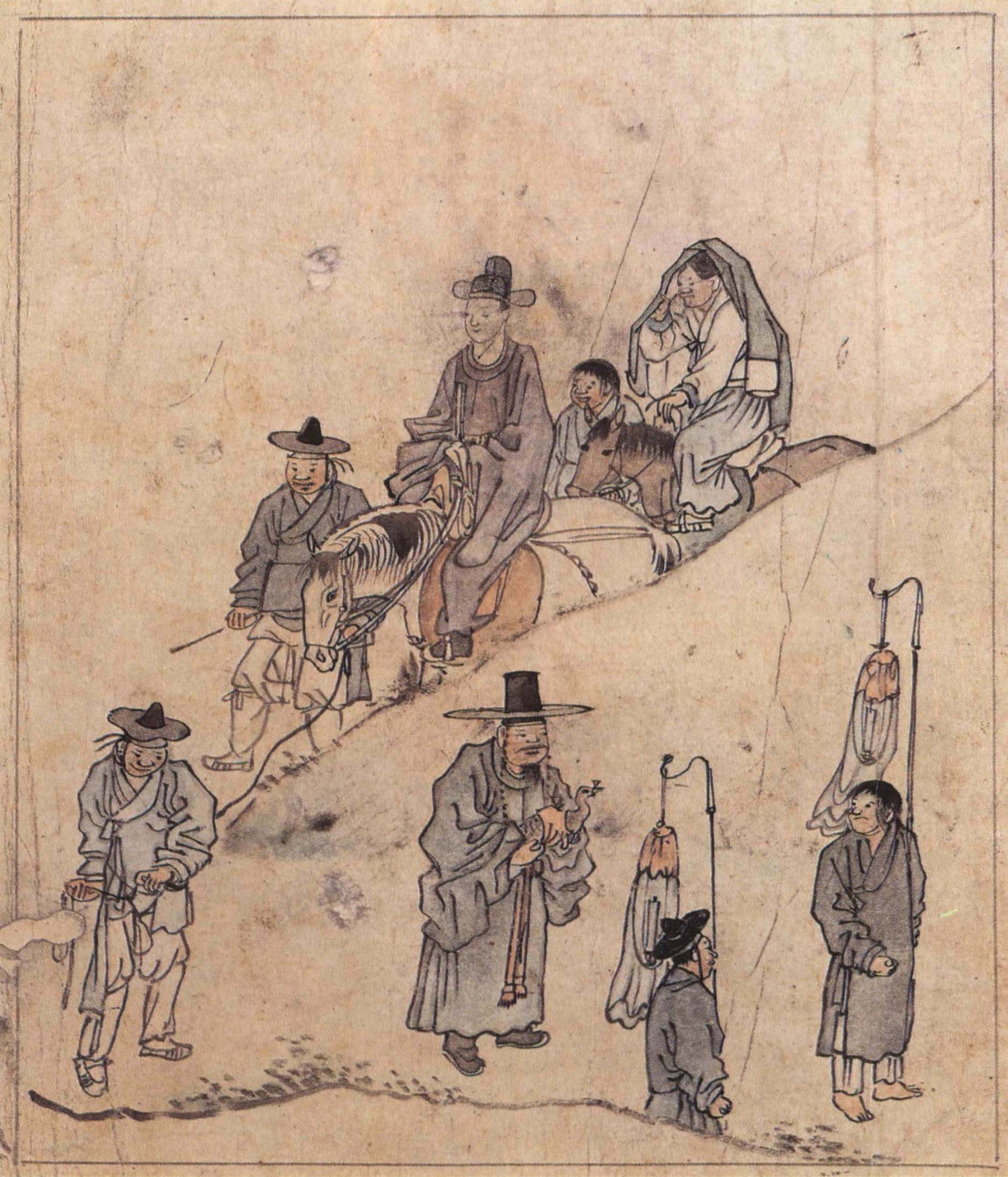
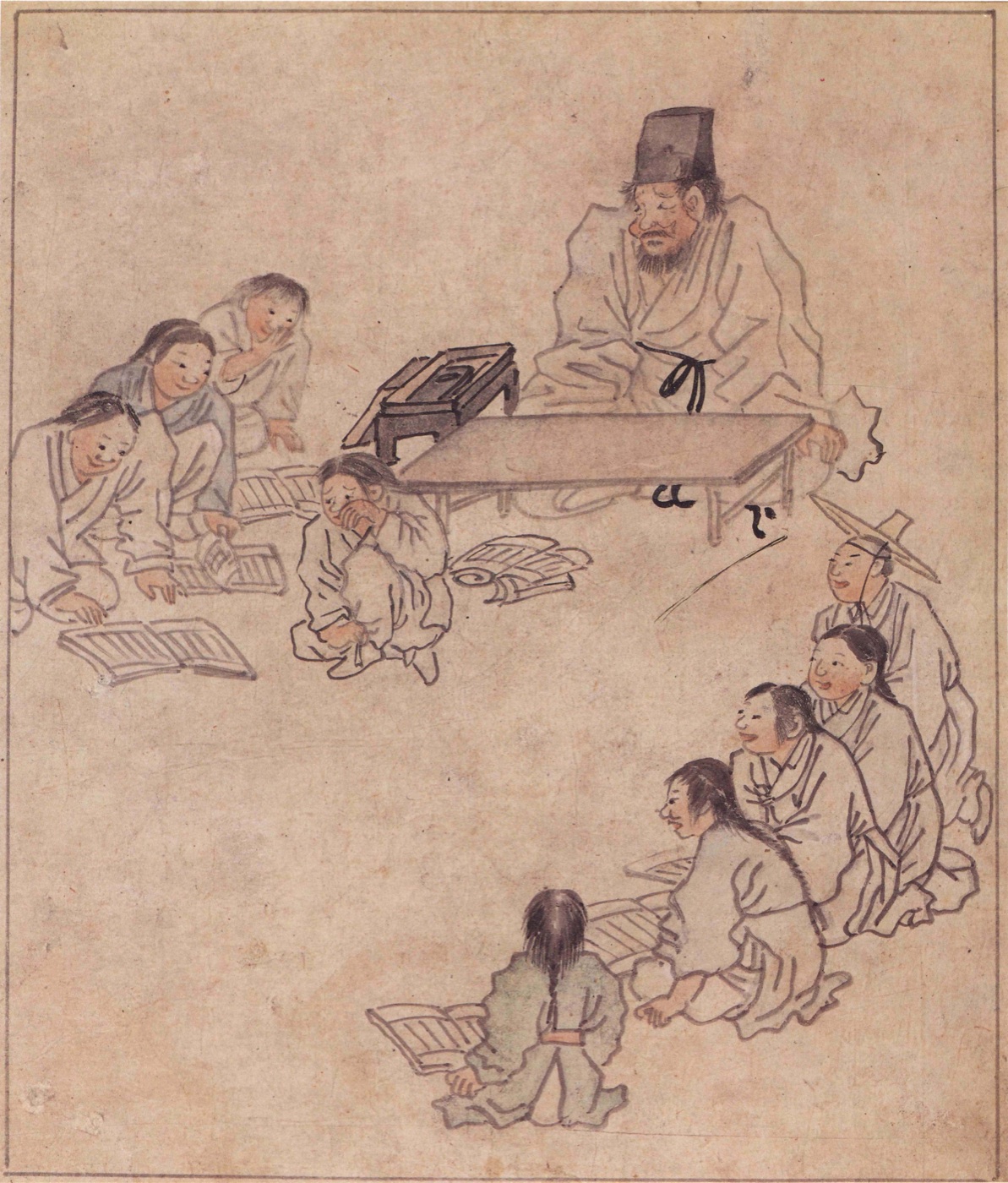
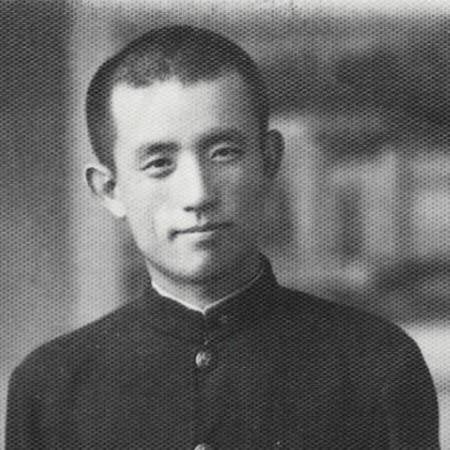
Yun Dong-ju’s poetry holds Christian imagery, Confucian self-examination, and conscience under colonial rule together. The Bible is not a key that explains his poems away; it is one language among those he used.
Photograph: unknown photographer, 1942 · public domain
Dates, public-domain status, and photographic provenance are recorded separately. The readings of Kim Ki-chang and Yun Dong-ju are interpretive guidance and do not reduce either artist’s work to a single religious key.
The Bible entered how Koreans watch, dress, eat, gather, and speak about public truth. Each example is one path of influence, not the single cause of a change.
Lee Chang-dong’s 2007 film refuses easy forgiveness. It asks whether telling a victim that God has forgiven the person she cannot forgive is grace—or another violation.
Ephesians 4:32
Christian convert Pak Song-chun, born into the butcher caste, petitioned the government in 1895 to reaffirm the abolition of discriminatory restrictions against butchers. After the government reissued its antidiscrimination decree, butchers wore the gat and dopo in a Jongno procession. Even inside church, yangban resisted worshiping beside him; separated congregations later reunited. Biblical equality was not immediate.
James 2:2–4
Grace before meals and shared food after worship became habits in many Korean churches and homes. Whether the table crosses class and generation is measured by who actually sits together.
1 Timothy 4:4–5
John 8:32 became Yonsei University’s motto, carrying biblical language into an ideal of higher education. In Jesus’ context, however, freedom is not a slogan; it is tied to abiding in his word.
John 8:31–32
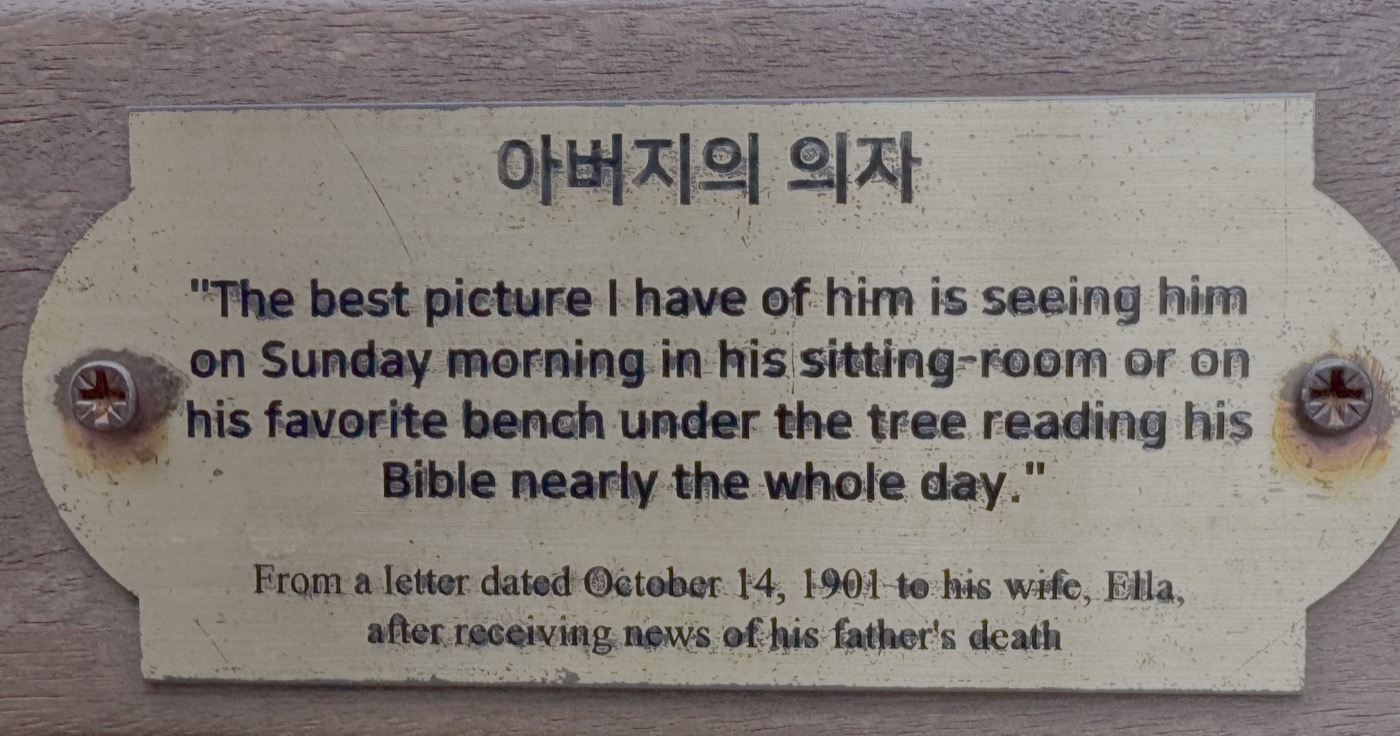
In a letter to his wife, Ella, dated October 14, 1901, Appenzeller remembered his father reading the Bible nearly all day on Sundays—in the sitting room or on a favorite bench beneath a tree. A book’s cultural influence does not arise only through large institutions. It moves through readers, family memory, and communities attempting to live it.
Photograph: Bill R. Majors, 2026
Film details are checked against the Korean Film Council record. Yonsei’s motto is read with university material and John 8:31–32. Pak Song-chun’s life and the caste conflict in the Gondangol community are checked against the Encyclopedia of Korean Culture.
Under the single word Bible are different translation traditions, canons, interpretive authorities, and relationships to later doctrine. Describing the difference matters more than attaching labels.
Many Korean Protestant churches use the 1998 New Korean Revised Version in worship, alongside other translations depending on denomination and community.
The Catholic Church in Korea uses the 2005 Seonggyeong translated from original languages, with differences in canon and terminology from Protestant traditions.
The 1977 Common Translation, produced by Catholic and Protestant scholars, remains in use especially among Anglican and Orthodox communities—evidence that cooperation was possible.
Several Korean new religious movements also use the Bible but differ through translation, added scripture, proprietary interpretation, or later doctrine. ‘Heretical’ is a church judgment; the museum records specific differences.
They examined the Scriptures daily.
Acts 17:11 · ESVTranslation dates and present use follow Korean Bible Society and Catholic Bishops’ Conference resources. This introductory card does not classify individual new religious movements. Any future named comparison will present both the movement’s own publications and independent scholarship.
People in this exhibition
Names, years, and roles appear together. Nationality, citizenship, and residence are distinguished only when relevant and verified.
1913–2001
Artist who relocated Gospel scenes into Korean visual life
1745–c. 1806
Joseon painter whose works provide visual context
1917–1945
Poet of conscience, faith, and colonial experience
1954–
Film director of Secret Sunshine
1862–1933
Christian reformer who challenged caste exclusion
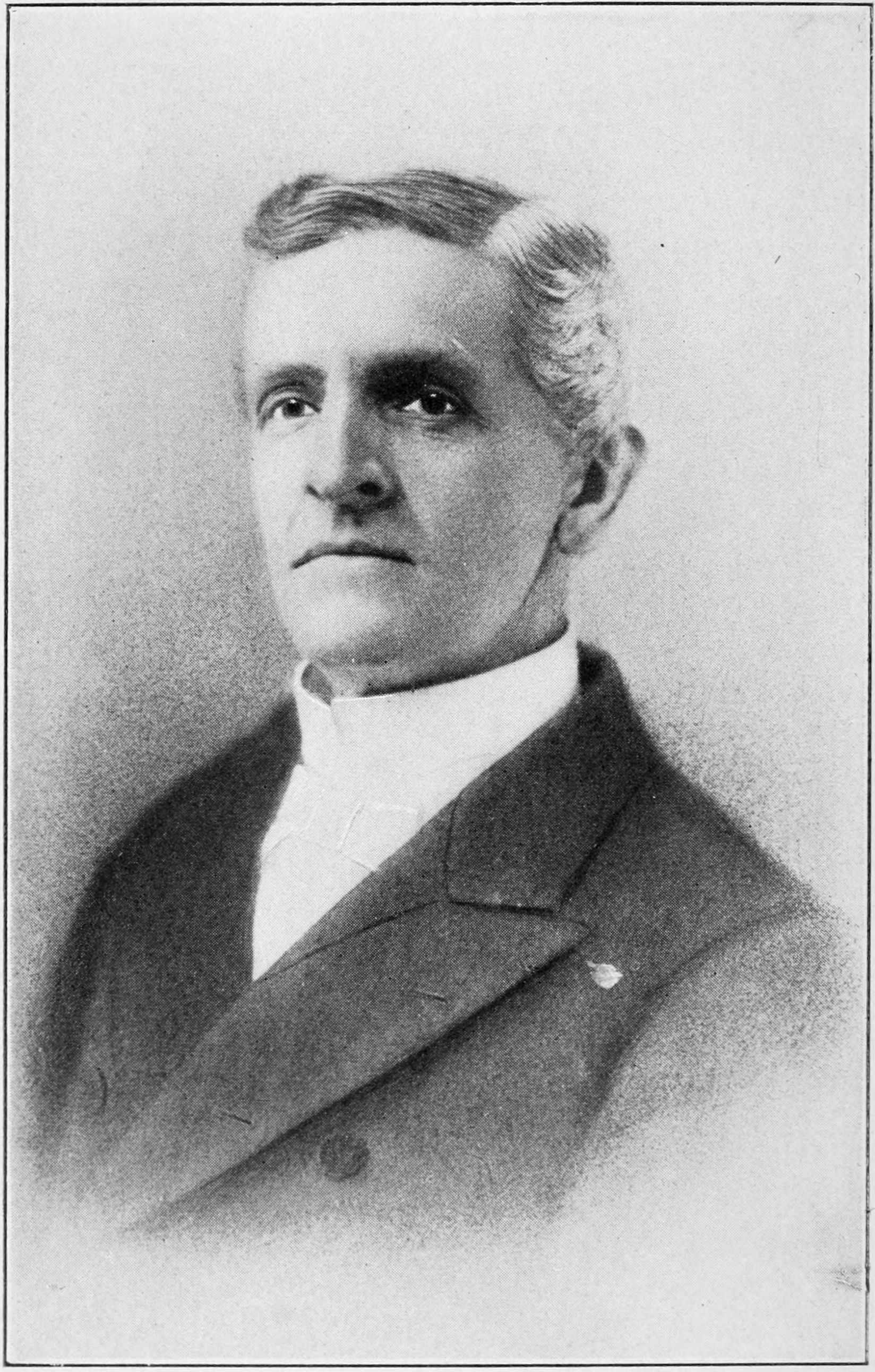
1858–1902
United States
Methodist missionary, educator, and Bible translator
1960–
Republic of Korea and United States · dual citizen
Resident of Seoul, Korea
Museum founder and contributing photographer
Portraits appear only when identification and image rights have been verified.
From influence toward understanding
Familiar phrases, beautiful art, institutions, and habits open a door. Beyond it, the text asks again: whom does your light illuminate, and whom does your salt preserve?